If your business is in relatively good shape and have been contemplating an asset purchase, now is the time. Not only will you be helping the Australian economy get back on its feet, you’ll be doing your business a favour by taking advantage of the instant asset write-off threshold of $150,000.
ABN registration is under scrutiny, does yours stack up? Have you run a small business that has ceased or paused operations? Or perhaps you’ve been hired as an ABN contractor?
ABN system reform due to black economy taskforce findings. The ABN system was originally introduced as a simple way to provide businesses with unique identifier when dealing with the government.
Alternative dispute resolution process available from ATO. Alternative dispute resolution (ADR) is not only used to resolve substantive disputes, and can be used to clarify or limit issues, and remove barriers created by relationship issues between you and the ATO.
Apprentices and trainees, ongoing government data-matching. Apprentices and trainees. Businesses with an apprentice or trainee beware. The Department of Education, Skills and Employment has commenced a new ongoing data-matching program in relation to the Supporting Apprentices and Trainees (SAT) measure.
ATO data matching program for online selling extended. Online sellers beware, the ATO has extended its current data matching program for another 4 years to ensure that businesses and individuals are correctly meeting their registration, lodgement and tax obligations.
ATO debt, paying your company debts by instalments. Does your business have ATO debts? Depending on your circumstances, you may be able to apply for a payment deferral, or work out a tailored payment plan with the ATO.
ATO power to report business tax debts to credit agencies. Proposed new ATO powers to disclose business tax debts to credit reporting agencies mean businesses with long-term unpaid tax bills could see their credit rating affected.
Contractors beware, with the ATO targeting contractors from data matching information. ATO has now received the taxable payments annual report from more than 158,000 businesses for the 2019-20 income year, it is now data-matching this information with what has been reported in the tax returns of these contractors.
Audit by ATO, your guide to small business benchmarks. The Australian Bureau of Statistics recently estimated that unreported business income totals around $24 billion, or 1.5% of our nation’s gross domestic product.
Bitcoin Part 2, In the bitcoin business. In Part 2 of our series on bitcoin, we examine the tax and GST consequences for business; specifically, those businesses that buy and sell bitcoin or mine bitcoin.
Business cash payments have got the ATO’s attention. Cash might be king, but the use of cash by businesses is attracting attention from the ATO. It will begin visits of selected businesses to ensure that all tax obligations are met.
Business real property can be moved into your SMSF. Transferring a commercial property into an SMSF can be a great way to build retirement savings and take advantage of the concessionally taxed SMSF environment. But when acquiring property from a related party, it’s vital the property meets the “business real property” test.
Business tax losses may benefit your business later. If you’re a sole trader or individual partner, you may be able to apply the loss against other income like salary or investment income, or carry the loss forward to a future year.
Car parking fringe benefits scruitiny by ATO, are you complying? Do you provide car parking to your employees on your business premises? If the parking meets certain conditions you may have to pay fringe benefits tax (FBT) on those and other benefits you provide to your employees.
Cash only businesses, Australia is predicted to become a cashless society by 2020 looks closer to becoming a reality with two developments: the government’s crackdown on cash-only businesses and the imminent launch of instant bank transfers.
Changing business structure, some sectors of the economy are suffering, others are booming, if you’re lucky enough to have a small business in a rapidly growing sector, you may be considering a change from a relatively simple sole trader business structure to a more formal structure such as a company or a trust.
Choosing the correct method of accounting for your business. There are two methods of accounting for GST: a cash basis and a non-cash basis (accruals).
Claiming work trips for business owners with some private time? As a business owner you can deduct the cost of work trips you need to take for business. But what happens when you mix business with some hard-earned time for relaxation?
ATO will be expanding the work of the Tax Avoidance Taskforce with a new program focusing on high wealth private groups. That segment encompasses approximately 9,000 individuals and 18,000 companies, the ATO will work on closing the tax gap: targeting high wealth private groups.
Common CGT obstacles homeowners meed to be aware of. Many homeowners are not aware that the “main residence” rules exempting the family home from capital gains tax (CGT) are in fact quite complex and contain many traps.
Cryptocurrency compliance may include income and CGT. Bitcoin is “neither money nor a foreign currency” the ATO warns, but it is still an asset that can be treated as income or counted as capital gains.
Customers personal information needs to be protected. Did you know that in Australia, any organisation that handles personal information could be captured under the notifiable data breaches scheme which requires organisations to notify individuals whose personal information is involved in a data breach that is likely to result in serious harm.
Dealing with the ATO, being a smart taxpayer means knowing what resources are available to you and understanding how the ATO deals with individuals as tax problems arise. Here are three simple things all individuals can do to help keep their tax affairs as stress-free as possible this tax time.
Debt forgiveness due to love and affection only for natural persons. The rules around Div 7A deemed dividends are complex and may have become more so with the release of a draft taxation determination from the ATO in relation to debts forgiven.
Declare personal use of your business trading stock? For business owners in industries such as hospitality and food retail, using small amounts of the business’ trading stock for personal use is a reality of day-to-day operations.
Deemed dividend changes include simplifying loan rules. Div 7A or deemed dividend payments may be familiar to you if you’re the shareholder or associate of a private company.
Deemed dividend rules, governments new 10-year loan model. The government is acting to simplify the Division 7A rules that govern deemed dividends, proposing a new 10-year loan model for compliant loans.
Division 7A - think twice or you could be paying more tax. If you own a small private company, perhaps with your spouse, think twice before borrowing money from that company. If the transaction is not recorded correctly you could end up paying tax on any loan thanks to the rules known as Division 7A.
Fair Work Commission finding that Uber is not an employer. Employer groups have been dealt a blow after a Fair Work Commission finding that Uber was not an employer and thus unfair dismissal laws did not apply.
Family trusts and the lower bucket company tax rate. If you run a “bucket company” as a beneficiary of a family trust you will be interested to hear that a new Bill has been introduced in Parliament that will exclude companies that fail a “passive income test” from the lower corporate tax rate of 27.5 per cent.
If you own a small business still recovering from the COVID-19 induced downturn, remember that you can take advantage of FBT concessions to lower the amount of FBT you need to pay. The concessions include exemptions for car parking in some instances, and work-related portable electronic devices.
FBT implications on providing Christmas parties and gifts. With Christmas fast approaching, the ATO has reminded employers and business owners about the potential FBT implications of providing office Christmas parties and gifts to employees.
FBT pay attention to motor vehicles, LAHA, car parking. With the FBT lodgement deadline fast approaching, we give you some tips on areas of FBT which may need particular attention, such as motor vehicles, employee contributions, the living-away-from-home allowance, car parking and the employer rebate.
Foreign income not disclosed? Make a voluntary disclosure to ATO. If you have any amounts of offshore foreign income you haven’t declared to the ATO – perhaps interest from a foreign bank account? Even if it seems like a small amount, you must declare it.
Franking rules, company tax rates and consequences. Reducing the corporate tax rate for small to medium businesses has great benefits, but it may bring some unintended consequences in terms of the franking rules.
Government contracts require Statement of Tax Record (STR). Businesses wanting to participate in the Federal Government’s post-COVID-19 economic recovery projects need to be aware that they may need to obtain a statement of tax record (STR) from the ATO prior to the commencement of any tender process.
Government extends the instant asset write-off again. This extension of the instant asset write-off for a further year is great news for small businesses who may be planning to purchase assets for use in their business in the near future.
Government tenders to require satisfactory tax compliance. Bidding on Commonwealth government tenders could soon be more complex, with the government seeking to exclude businesses that do not have a satisfactory tax record from the tender process.
Government to provide flexibility for company losses. The government plans to give companies greater access to prior year tax losses in a bid to stimulate business innovation.
GST applies to sale of low value goods from 1 July 2018. Did you know from 1 July 2018, GST will apply to sales of all goods to Australia. The previous $1,000 low-value threshold will no longer apply and those businesses that meet the $75,000 registration threshold will need to register, charge and remit GST to the ATO.
GST on imports, are you optimising your business cashflow? If you import goods as part of your business, you don’t have to pay GST upfront if you’re registered for the ATO’s deferred GST scheme. Instead, you can defer and offset GST amounts in your next activity statement.
Hankering for a hobby farm? Have a penchant for a few shimmering vines, or maybe a cluster of Angus cows on green pastures? Maybe you’re already “farming”. You might see your rural acres as a hobby but your idyllic vision may not be one shared by the ATO if it morphs into a business.
Hosting Christmas parties, what you can claim before FBT hits? The festive season is just around the corner and if you are an employer you may be about to host, or you may already have hosted a Christmas party for staff to celebrate the year’s achievements.
Illegal phoenixing, ATO retaining taxpayers refunds. The ATO now has broader powers to retain refunds in instances where taxpayers have outstanding notifications.
Illegal-pheonixing, Governnment introduces measures to combat illegal-phoenixing. New laws are now in place to target illegal-phoenixing of companies which by some estimates costs businesses, employees and governments more than $2bn a year. At its core, illegal phoenixing is the use of serial deliberate insolvency as a business model to avoid paying company debts.
Increase statutory demand threshold, if you run a small business or any business for that matter, you may be interested in the current government consultation to increase the statutory demand threshold for debts.
Independent contractors, do you need to pay super? Your business may be required to make superannuation contributions for some independent contractors, even if they have an Australian Business Number (ABN).
Insolvent trading, know about the new safe harbour defence. Insolvent trading. If you’re a company director you know only too well that those two words are bad news.
Insurance payouts taxable? Australia has been battered by a combination of fire and flooding in the past few months, it is little wonder then the topic insurance payouts are on everyone’s lips. What is perhaps most concerning is that not everyone knows insurance payments may have tax consequences.
Hunter Partners have recorded some presentations that cover areas of interest of many of our clients. If you have any queries relating to these presentations, call us on (07) 4723 1223.
Push to reform the taxation of discretionary trusts? Recent years have seen much discussion about the effectiveness and fairness of Australia’s current rules for taxing discretionary trusts.
Reduce car FBT liability with one simple change to operating cost method. Among the many unintended consequences of COVID-19, businesses that provide cars to their employees may now be on the hook for more FBT.
Rental property tax deductions, what can we claim? Rental property deductions have many rules, and the ATO is on the lookout for incorrect claims. Some expenses can be deducted immediately, while others will need to be claimed over time. Stay on top of the rules and avoid ATO headaches this tax time.
Rental property tax deductions, what can we claim? Paying off a loan for an investment property you’ve purchased? The ATO says over-claimed interest is a common error made in rental property expense claims.
Salary Sacrifice will help get the most from your salary and wages while minimising your tax at the same time. Considering a salary packaging or salary sacrifice arrangement may be the way to go. While superannuation is one of the first things that pop up when talking about salary sacrifice, there are many other more interesting possibilities. Depending on your industry and what your employer will allow, it is possible to package a range of things including education or study payments, car repayments, general living expenses or even entertainment expense.
With real wages not tipped to grow for a while, there is still a way that you can make the most of your money by salary packaging or through salary sacrifice arrangements if your employer has systems in place that allow for these types of arrangements.
Essentially, a salary sacrifice arrangement (sometimes also referred to as total remuneration packaging) is a formal agreement between an employer and employee whereby the employee agrees to receive a lower amount of pay each payday in return for the employer providing them with benefits of a similar value to the reduction in pay.
You may be thinking why it would be advantageous to receive less pay, the answer lies in the pre-tax and post-tax salary amounts. The amount that ends up in the bank every payday is your post-tax salary, that is the amount that you get after the tax is taken out. When you enter into salary sacrifice arrangements you may be able to pay for certain things from your pre-tax salary, which means your money goes further and you end up paying less tax.
Example
Ian receives a monthly pay of $1,000 before tax (pre-tax), say he pays 30% tax on the pay, that would mean his post-tax pay (the amount he receives in the bank) is $700 and $300 is withheld in tax. Ian has to pay for a course of study related to his work costing $200 each month, if he uses his after-tax pay to pay for the course he would only have $500 left. However, if his employer allows him to salary package the course of study and pay for it using his pre-tax salary, the scenario would be as follows:
Salary and wages before tax
$1,000
Salary sacrifice amounts
-$200
Salary and wages after salary sacrifice
$800
Tax at 30%
-$240
Post-tax salary (the amount received in the bank)
$560
Therefore, as can be seen in this simple example, Ian would get $60 more per pay cycle just by taking advantage of a salary sacrifice arrangement.
If you think salary sacrifice may benefit you, note there are some requirements for it to be effective including:
the arrangement should be entered into before the work is performed (ie salary and wages, entitlements, bonuses etc that accrued before the arrangement was entered into cannot be a part of an effective salary sacrifice arrangement);
the arrangement should be in writing between you and your employer (but may be verbal in some instances);
there should be no access to the sacrificed salary (ie the sacrificed salary must be permanently forgone for the period of the arrangement).
Once the requirements are satisfied, there are no restrictions on the types of benefits that can be sacrificed, the most important thing is that the benefits form part of your remuneration, replacing what would otherwise be paid as salary. Probably the most common types of salary sacrifice arrangements would relate to superannuation and costs of study. However, depending on the industry and employer there may be many other types of benefits that could be included.
Salary Sacrifice, want more money in your pocket?
If you want to get more out of your wages and would like to find out how to structure and negotiate and effective salary sacrifice arrangement based on your unique situation, we have the expertise to help. Contact us today.
Hunter Partners are Accountants, Tax Agents and Financial Planners. We can assist you with all aspect of your accounting, tax and financial planning requirements, call Hunter Partners on (07) 4723-1223.
Small business CGT concessions, make sure your claim stacks up as they can save your businesses some serious tax – and help business owners significantly boost their superannuation – but it’s essential that you keep the right records, particularly for when the time comes to sell.
Small business CGT concessions, when do I qualify? The small business CGT concessions are a great tool for business owners to transfer wealth into super. Here, we break down the two essential requirements you must first meet in order to access any of the concessions.
small business super clearing house.Running a small business is already stressful enough in this economic climate without needing to worry about compliance of super guarantee payments and whether they have been properly made.
Small business super clearing house, are you signed up? The small business superannuation clearing house (SBSCH) is a convenient service that allows a small business to make superannuation contributions for its employees in one single payment.
SMSF contraventions, is compliance putting your fund at risk? SMSFs can be a great investment vehicle for those prepared to get the compliance side of things right.
SMSF investment strategy compliance, ATO to check on over 17,000 SMSFs that are heavily invested in one asset class will soon receive a “please explain” from the ATO to check whether they can justify their diversification risk.
SMSF trustees must watch their related party expenses. The tax laws that penalise uncommercial transactions between SMSFs and related parties are set to get tougher, with an SMSF’s expenses to come under the spotlight.
SMSFs differ from other funds so understand the differences. Insurance and dispute resolution might not be high on your list of things to consider when starting up an SMSF, but these issues do affect SMSFs differently to public offer funds. What will you do if a dispute arises between SMSF members, and what does taking out insurance in an SMSF practically involve?
Super guarantee payments, make sure you get them right. Paying the right amount of super to your employees can at times be a complex exercise, with the threshold changes in the recent years and the contribution base which changes every year according to indexation factors.
Super opt out choice for high earners with multiple jobs. If you’re a high income-earner with multiple employers, you may be aware of potential traps with compulsory super contributions that can lead to some hefty and unfair penalty taxes – and until now there’s been little anyone can do to avoid the problem.
To many individuals, the difference between tax planning and tax avoidance is not immediately obvious, while the ATO considers the former to be a legal way to arrange your affairs to minimise the tax you pay, the latter could land you in legal hot water.
Tax avoidance taskforce expands to top 500 private groups, high wealth private groups, and medium and emerging private groups. Perhaps the most interesting is the inclusion of medium and emerging private groups which cover around 97% of the total private group population.
Tax debts able to be disclosed by ATO to credit agencies. ATO is now able to disclose your tax debts to credit agencies. Businesses with tax debts beware, the ATO will now be able to disclose the details of your tax debts to credit ratings agencies, which could potentially affect the ability of the business to obtain finance or refinance existing debt.
Tax debts may be released by ATO to credit agencies. Tax debts could soon affect the credit scores of businesses, with the government’s introduction of draft legislation to allow ATO to share debt details of businesses to credit rating agencies.
Tax losses after a change in control, some ATO guidance. Has your company made a tax loss in recent years? If new investors or a major share sale is on the cards, the company may benefit from flexible new rules allowing access to prior losses – the key requirement being that the business carried on, post-equity restructure, is “similar”.
Tax man doing the right thing by you? Anyone that has had a bad experience after navigating the maze of bureaucracy that is the Tax Office (ATO) may be reminded of an old Latin phase “quis custodiet ipsos custodes” which loosely translates into “who watches the watchers?”.
Taxable Payments Annual Report (TPAR) was designed to supress, if not outright eliminate the “black economy” by requiring businesses providing various services to lodge a report containing details of payments made to contractors or subcontractors.
TPAR includes more businesses this year. With the ultimate distraction of the pandemic, many businesses around Australia may not be aware that they will be required to lodge a Taxable Payments Annual Report (TPAR) for the first time this year.
Unable to obtain payment from a debtor, get deduction for bad debt, so don’t panic. Depending on the accounting method used by your business, you may be able to claim a tax deduction for the unpaid amount. April 2021 has become a closely observed month with many of the government’s COVID-19 economic supports coming away. As with the wind down of any stimulus, there’ll be inevitable business casualties, perhaps not immediately, but many economists predict that there’ll be many business failures in the coming months. If you find your business in the unenviable position of being unable to obtain payment from a debtor, don’t panic, depending on the accounting method used by your business, you may be able to claim a tax deduction for the unpaid amount.
As the government’s COVID-19 economic supports and stimulus winds down, there is no doubt that some businesses may experience debts that cannot be recovered from customers or other debtors. This unrecoverable debt is commonly known as a “bad debt” and you may be able to claim a tax deduction for the unrecoverable amount depending on the accounting method used.
If you account for your income on an accruals basis, that is, you include all income earned for work done during the income year even if you haven’t yet received the payment by the end of the income year, you may be able to claim a tax deduction for a bad debt.
In order to claim a deduction for a bad debt, you must have included the amount in your assessable income either in the current year tax return or an earlier income year. You will also need to determine that the debt is genuinely bad, rather than merely doubtful, at the time your write it off. Whether or not the debt is genuinely bad depends on the circumstances of each case, with the guiding principle being how unlikely the debt can be recovered through reasonable and/or commercial attempts.
According to the ATO, this does not always mean you need to have commenced formal proceedings to recover the debt. Evidence of communications seeking to obtain payment of debt, including reminder notices and attempts to contact the debtor by phone/mail/email may be sufficient in certain circumstances.
The next step in claiming a bad debt deduction is to write-off the debt as bad. This usually means that you have to record the decision in writing to write-off the debt before the end of the income year in which you intend to claim a deduction. However, the ATO notes that the removal of debt from a customer’s account along with a note indicating that it was a bad debt expense may be sufficient.
In instances where you have dealt with the bad debt in other ways, for example, waived or forgiven the debt, extinguished the liability in another way, or sold the debt, the debt is no longer is existence and you cannot write it off as a bad debt.
Companies that want to deduct bad debts will have the additional hurdle of satisfying the continuity of ownership test (COT). Those that do not satisfy the COT may still deduct a bad debt is you satisfy the same business test or the similar business test. Other special rules also exist trusts including trusts that have made a family trust election.
There may also be GST consequences for businesses when writing-off bad debts. For example, where the business accounts for GST on a non-cash basis, a decreasing adjustment can be claimed where you’ve made the taxable sale and have paid the GST to the ATO and have subsequently not received the payment. However, the debt will need to have been written off as bad and has been overdue for 12 months or more.
Businesses that account for income on cash basis will not be able to claim a deduction for bad debts. This is because these businesses only include an amount in their assessable income when it is received, therefore, bad debts will have no income tax consequences.
Unable to obtain payment from a debtor, get deduction for bad debts?
If non-payment from customers or debtors is getting your business down, we can help you sort out the bad debts from the others and help you get a tax deduction or a GST adjustment when the time comes. Call us today for expert advice.
Hunter Partners are Accountants, Tax Agents and Financial Planners. We can assist you with all aspect of your accounting, tax and financial planning requirements, call Hunter Partners on (07) 4723-1223.
Underpayment of workers, can a payroll service be liable? The exploitation of vulnerable workers has been getting a lot of press recently, but did you know that it is not just the company or business involved that may be liable to penalties?
Valuing your SMSF assets, know the market value requirements. Recording the market value of your SMSF’s assets is an important trustee responsibility. But how do you prove “market value”, how often must you value assets and when do you need to hire an expert valuer?
Trust vesting date, what happens when your trust vests? Vesting of trusts and tax consequences related to such events are complex issues which may end up costing the trust and beneficiaries needless headaches and hip pocket pain.
Work-related car expenses that employees can claim. If you have special car travel needs for work, like driving between two jobs or different worksites, or carrying bulky equipment you may be able to claim deductions for some of your car expenses
Working and studying part-time, course fees deductible? If you go “back to school” the costs can really add up, but the good news is that your course fees may be deductible if the course is sufficiently related to your current employment.












































































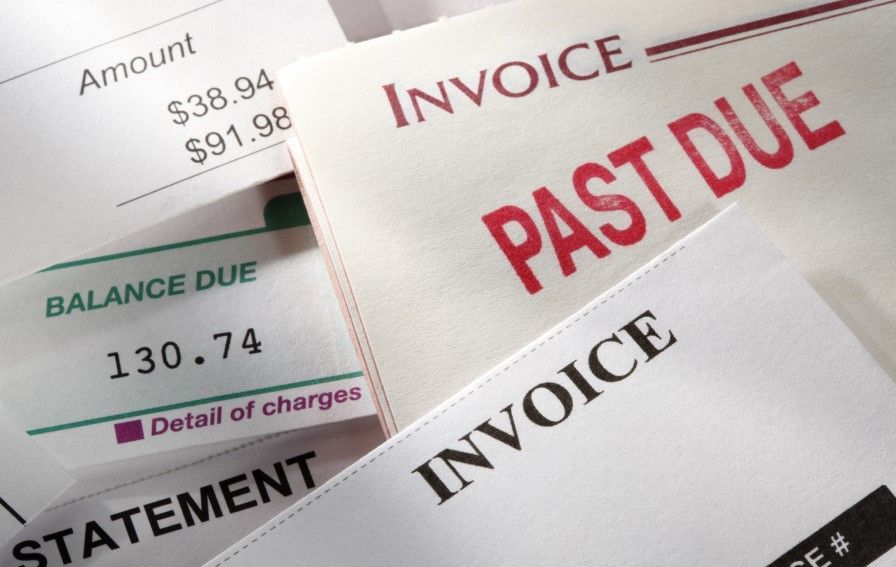
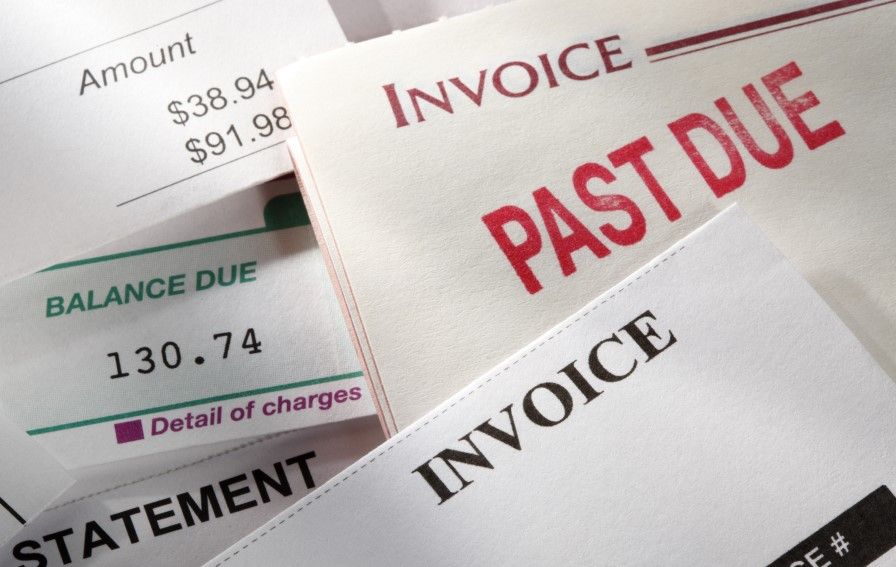 Unable to obtain payment from a debtor, get deduction for bad debt, so don’t panic. Depending on the accounting method used by your business, you may be able to claim a tax deduction for the unpaid amount. April 2021 has become a closely observed month with many of the government’s COVID-19 economic supports coming away. As with the wind down of any stimulus, there’ll be inevitable business casualties, perhaps not immediately, but many economists predict that there’ll be many business failures in the coming months. If you find your business in the unenviable position of being unable to obtain payment from a debtor, don’t panic, depending on the accounting method used by your business, you may be able to claim a tax deduction for the unpaid amount.